

Healthcare
Healthcare safety training and talks
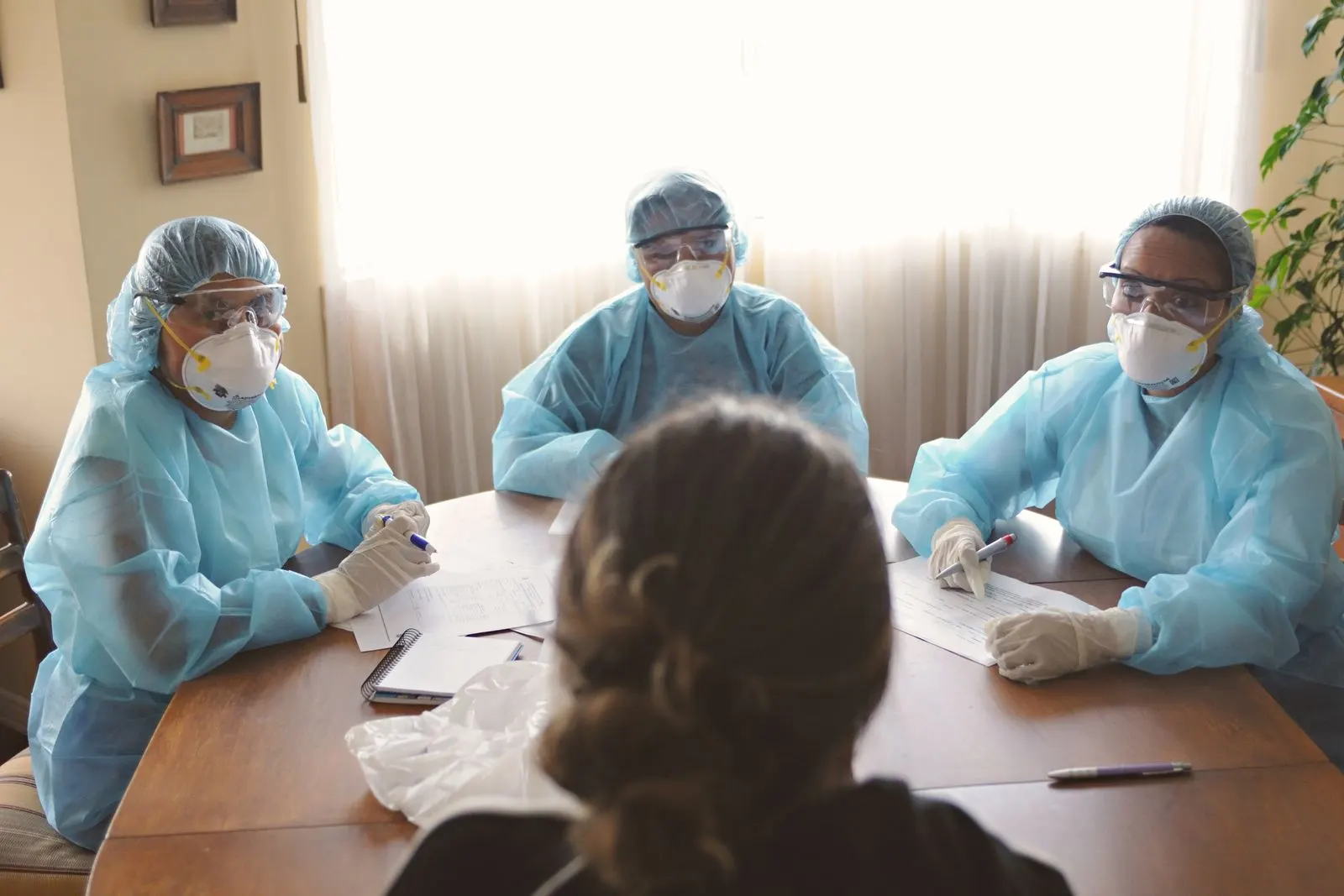
Clinics, hospitals, dental offices and care homes have hazards a construction crew never sees: needles, body fluids, disinfectants and patients who need help moving. The rules are in 29 CFR Part 1910. Here is what they require, how to run short huddles on a busy unit, and how to reach staff who speak more than one language.
FREE TALKS
Top talks for healthcare
- Personal protective equipment (PPE)FreeTraining kit $9
- Ladder safetyFreeTraining kit $9
- Slips, trips and fallsFreeTraining kit $9
- Electrical safetyFreeTraining kit $9
- Fire preventionFreeTraining kit $9
- Heat stressFreeTraining kit $9
- HousekeepingFreeTraining kit $9
- Winter safetyFreeTraining kit $9
- Spring safetyFreeTraining kit $9
- Hand safetyFreeTraining kit $9
- Eye and face protectionFreeTraining kit $9
- Driving safetyFreeTraining kit $9
PART 1
What OSHA requires in healthcare
- Bloodborne pathogens: a written exposure control plan (29 CFR 1910.1030(c)(1)(i)), reviewed and updated at least annually (29 CFR 1910.1030(c)(1)(iv)); PPE at no cost to the employee (29 CFR 1910.1030(d)(3)(i)); and training at no cost and during working hours (29 CFR 1910.1030(g)(2)(i)), at initial assignment and at least annually after that (29 CFR 1910.1030(g)(2)(ii)). Training records are kept for 3 years (29 CFR 1910.1030(h)(2)(ii)).
- Chemicals: disinfectants and other hazardous chemicals bring HazCom training (29 CFR 1910.1200(h)(1)). Drugs in solid, final form for direct administration to the patient, such as tablets, are outside the standard (29 CFR 1910.1200(b)(6)(vii)).
- Respirators: where respirators are necessary, a written respiratory protection program with worksite-specific procedures (29 CFR 1910.134(c)(1)).
- Radiation: people working in or frequenting a radiation area are informed and instructed on the hazards and precautions (29 CFR 1910.1096(i)(2)), unless NRC or state rules govern instead (29 CFR 1910.1096(i)(1)).
- Floors: kept clean and, to the extent feasible, dry (29 CFR 1910.22(a)(2)).
- Workplace violence and patient handling: Part 1910 has no specific standard for either, so talks on them are good practice.
PART 2
How to run safety huddles on a unit
Use the shift huddle; two to five minutes is enough. One topic, one action: where the sharps container is on this unit, how to call for help with a combative patient, how to report a needlestick right away. Rotate who leads it: nurses, aides, techs, environmental services. Ask what got in the way this week. Keep a sign-in record with the sign-in sheet generator. A huddle does not count as the annual bloodborne pathogens training, which has its own content and record rules.
PART 3
Mixed-language teams
Healthcare teams often include staff who speak Spanish and other languages, especially in environmental services, dietary and maintenance. Give the huddle in both languages when needed. Chemical labels stay in English, and you may add other languages (29 CFR 1910.1200(f)(10)). Show, do not just tell: how to activate a safety needle, how to take off gloves without touching the outside. Ask staff to repeat the exposure reporting steps in their own words.
PART 4
Top talks for healthcare
Start with bloodborne pathogens, sharps and needlestick safety, infection control, blood and body fluid cleanup, safe patient handling, slips and falls in healthcare, workplace violence in healthcare, hazardous drugs and chemicals, tuberculosis exposure and dental office safety. For office and dental ideas, see office safety topics, and check required trainings with the training requirements finder.
REQUIREMENTS
Training OSHA requires
Standards with training paragraphs that apply to common work in this industry. Whether a standard applies depends on the work each person does. Topics in orange have a free talk now; the rest are on the way and you can request them.
- 29 CFR 1904.39Reporting fatalities, hospitalizations, amputations, and losses of an eye as a result of work-related incidents to OSHAIncident reportingReporting injuries right away
- 29 CFR 1910.23Ladders
- 29 CFR 1910.30Training requirementsWalking and working surfaces
- 29 CFR 1910.38Emergency action plansSevere weatherFire drills and evacuationWorkplace violence preventionHurricane preparednessEmergency action plans+6
- 29 CFR 1910.95Occupational noise exposure
- 29 CFR 1910.132General requirementsPersonal protective equipment (PPE)Hand safetyEye and face protectionChemical handlingChoosing the right gloves+6
- 29 CFR 1910.134Respiratory protection
- 29 CFR 1910.151Medical services and first aid
- 29 CFR 1910.157Portable fire extinguishers
- 29 CFR 1910.332Training
- 29 CFR 1910.1030Bloodborne pathogensInfection control at workBloodborne pathogensDental office safetySharps and needlestick safetyBlood and body fluid cleanup+1
- 29 CFR 1910.1048FormaldehydeFormaldehyde exposure
- 29 CFR 1910.1096Ionizing radiationRadiation safetyDental office safety
- 29 CFR 1910.1200Hazard communication
- 29 CFR 1910.1450Occupational exposure to hazardous chemicals in laboratories
- 29 CFR 1926.20General safety and health provisionsJob hazard analysis (JHA)
- 29 CFR 1926.21Safety training and education
- 29 CFR 1926.35Employee emergency action plansEmergency action plans
- 29 CFR 1926.50Medical services and first aid
- 29 CFR 1926.53Ionizing radiationRadiation safety
- 29 CFR 1926.54Nonionizing radiationLaser safety
- 29 CFR 1926.57VentilationIndoor air quality
- 29 CFR 1926.150Fire protection
- 29 CFR 1926.602Material handling equipmentSeat belt use
- 29 CFR 1926.1060Training requirements
CUSTOM
Missing the topic you need?
Request it and we send the full kit in English and Spanish within 24 hours for $9.